Design
The time needed to explore options, resolve details and coordinate drawings depends on how defined your ideas are and how complex the proposed changes become.

Auckland Renovation Timeline Guide
Every renovation is different. Understanding the full journey—from early design and approvals to the final handover—removes uncertainty and helps you plan around family life with greater confidence.
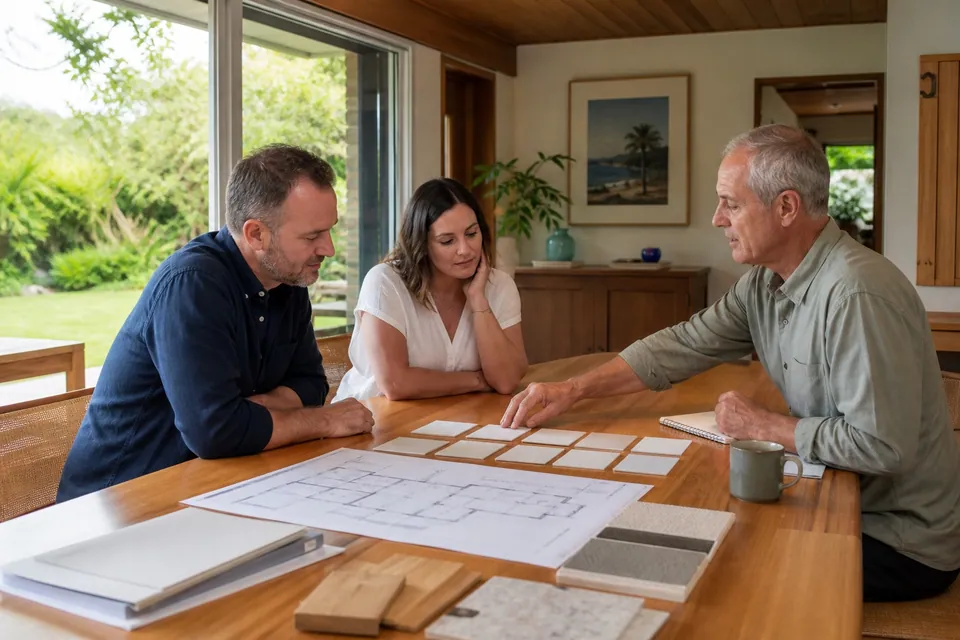
A clearer programme starts with decisions made before site work.
Trigger Moment
“We want to renovate, but how much will this disrupt our lives?” For many families, this is the real question behind the search for a timeline.
You may be thinking about school mornings, working from home, children, pets, noise, dust and whether essential rooms will still be usable. The number of weeks matters—but knowing what happens, when decisions are needed and how daily life will be managed matters just as much.
Recognition
A useful renovation programme considers the people living around the work—not only the sequence of construction activities.
How school, work and family routines will continue while parts of the home are unavailable.
Whether children and pets can remain safely separated from active work areas.
How long you may be without a kitchen, bathroom or other essential space.
Whether staying elsewhere would be simpler than living through the work.
When important decisions will be needed and who will keep you informed.
How the programme can work around family events, travel or a preferred move-in date.
What Affects The Timeline?
The most dependable programmes are built from resolved information. These are the main factors that influence how soon work can begin and how smoothly it can progress.
The time needed to explore options, resolve details and coordinate drawings depends on how defined your ideas are and how complex the proposed changes become.
Where consent or planning approval is required, documentation, council review and requests for further information need to be allowed for before site work can begin.
Older buildings, previous alterations and concealed conditions may require investigation or careful sequencing once existing surfaces are opened.
A contained room renovation and a whole-home transformation involve different teams, dependencies and levels of household disruption.
Cabinetry, windows, fixtures and specialist finishes can carry lead times. Early selections help ordering align with the construction sequence.
Exterior and structural work may be weather-sensitive. A sensible programme considers seasonal conditions and protects the home as work progresses.
Typical Renovation Journey
These stages are consistent even though their length will vary. Seeing the whole journey helps explain why meaningful planning starts well before anyone arrives on site.
We discuss what needs to change, your timing concerns and how far your ideas have developed.
The layout and details are developed so the intended outcome can be understood and coordinated.
Required drawings and specialist information are prepared, lodged and worked through with council.
Selections, procurement, site setup, household arrangements and the build sequence are brought together.
The work moves through an agreed sequence, with progress and upcoming decisions communicated clearly.
Final details, documentation and handover are completed so you can settle back into the home with clarity.
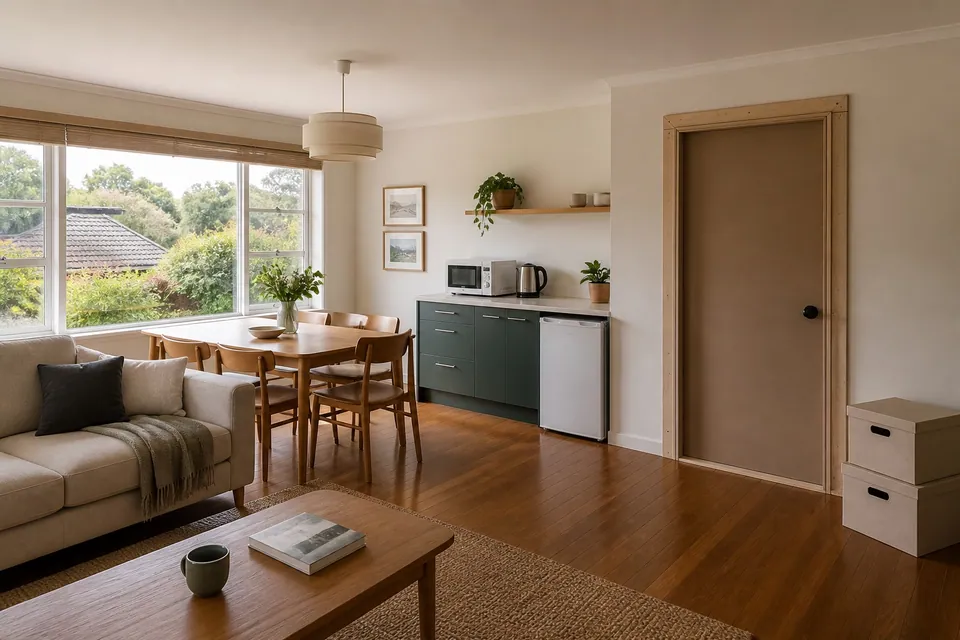
Can We Stay In Our Home?
Staying can be practical when the work is contained, essential facilities remain available and occupied areas can be separated safely. It may reduce accommodation costs and keep family routines familiar.
For extensive structural work, whole-home renovations or periods without a functioning kitchen or bathroom, temporary accommodation can be calmer and may let the site operate more efficiently.
The right answer depends on the scope, your household and your tolerance for disruption—not a blanket rule.What Causes Delays?
The aim is not to pretend nothing will change. It is to identify likely pressure points early and respond clearly if an unknown condition affects the agreed plan.
Moisture, structure, services or previous work may only become visible after existing linings or finishes are removed.
Changing direction during construction can affect drawings, approvals, ordering and the sequence of several trades.
Custom or imported products can have longer lead times, particularly when a late selection affects work already scheduled.
Persistent rain or high winds can interrupt work that depends on a dry, safe or exposed building environment.
Unresolved finishes, fittings or scope choices can hold up connected work. A decision schedule helps keep these moments visible.
How Neda Builda Helps
A clear process does not remove every unknown from renovation work. It makes the known work easier to coordinate and creates a better way to handle change when it occurs.
You should know what is happening now, what comes next and which decisions need your attention.
Resolving design, approvals, selections and long-lead items early removes avoidable uncertainty from the construction phase.
We discuss disruption, known constraints and areas that still carry uncertainty so the programme is understood in context.
When circumstances change, early explanation helps you understand the effect and make the next decision with confidence.
Renovation Timeline Questions
These broad answers are a starting point. A useful project timeline needs to be based on your home, scope, approvals and selections.
Once site work begins, a kitchen renovation is commonly measured in weeks rather than days. The complete journey is longer because design, cabinetry manufacture, appliance decisions and material ordering often happen well before the existing kitchen is removed.
A bathroom commonly takes several weeks on site, depending on layout changes, waterproofing, tiling, inspections and what is found after demolition. Product availability and decisions made before work begins can have a significant effect on the programme.
An extension is normally a multi-month construction project, preceded by design, engineering and consent. Its size, structure, access and connection to the occupied home all influence both timing and disruption.
Whole-home renovations are generally measured in months and can vary considerably. Structural change, the number of rooms, services, finishes and whether work is staged all need to be understood before a useful programme can be prepared.
Begin several months before the date you hope construction might start—and earlier for complex work. Design, approvals and custom materials take time, and beginning early creates more room to make considered decisions rather than rushed ones.
Plan With Greater Clarity
Tell us what you are considering, how your household uses the home and when you hope to begin. We'll help you understand the stages and timing questions worth exploring next.